Related Articles



Introduction
Gardening has always been a beautiful way to connect with nature and create a healthy environment around our homes. A green garden not only improves the beauty of a place but also provides fresh air, reduces stress, and creates a peaceful atmosphere. However, maintaining a healthy garden requires proper care, especially when it comes to watering plants. Traditional watering methods often waste water because plants may receive too much or too little moisture. This is where AI smart irrigation systems are changing the future of modern gardening.
Artificial intelligence, commonly known as AI, has introduced new possibilities for homeowners and gardeners. AI smart irrigation systems use advanced technology, sensors, weather information, and data analysis to provide the right amount of water at the right time. These systems help plants grow healthier while reducing unnecessary water consumption.
With increasing concerns about water shortages and climate changes, water efficient gardening has become more important than ever. AI based irrigation technology allows people to maintain beautiful gardens while using natural resources responsibly. It combines gardening knowledge with modern technology to create smarter, greener, and more sustainable outdoor spaces.
What Are AI Smart Irrigation Systems?
AI smart irrigation systems are advanced watering solutions that use artificial intelligence to understand the needs of plants and soil. Unlike traditional irrigation methods where watering schedules are fixed, AI systems make decisions based on real conditions.
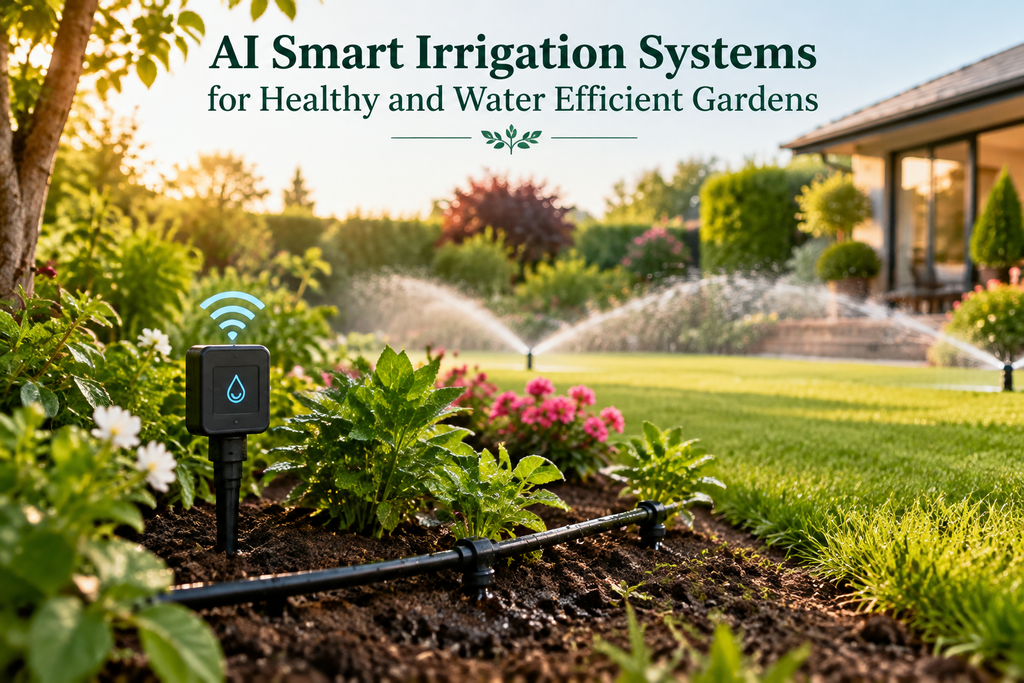
These systems usually include soil moisture sensors, temperature sensors, weather forecasting data, cameras, and smart controllers. The collected information is analyzed by AI algorithms that determine when plants need water and how much water should be supplied.
For example, if the soil already contains enough moisture after rainfall, the AI system can automatically reduce or stop irrigation. On a hot and dry day, it can increase watering to protect plants from dehydration. This intelligent decision making helps create a balanced environment where plants receive exactly what they need.
How AI Improves Garden Water Management
One of the biggest advantages of AI smart irrigation systems is better water management. Many gardens lose a significant amount of water because of overwatering, evaporation, or inefficient watering schedules.
Traditional irrigation systems often operate according to timers. A sprinkler may run every morning even when the soil is already wet. This wastes water and can also damage plants by causing root problems and fungal diseases.
AI irrigation systems solve this issue by monitoring actual garden conditions. They analyze soil moisture levels, weather patterns, plant requirements, and seasonal changes. Based on this information, the system creates an efficient watering plan.
This approach helps homeowners save water while maintaining healthy plants. A garden that receives proper irrigation develops stronger roots, better growth, and improved resistance against environmental stress.
The Role of Sensors in Smart Irrigation
Sensors are one of the most important components of AI based irrigation systems. They collect real time information from the garden and send data to the smart controller.
Soil moisture sensors measure the amount of water available in the soil. If the soil becomes too dry, the system automatically starts irrigation. When enough moisture is detected, watering stops.
Temperature sensors help the system understand heat conditions. During extremely hot weather, plants lose water faster, so the irrigation system can adjust accordingly.
Weather sensors and online weather data also play an important role. AI technology can check upcoming rainfall predictions and prevent unnecessary watering before rain arrives.
By using these sensors, smart irrigation systems create a personalized watering system for every garden.
Benefits of AI Smart Irrigation Systems
1. Saves Water and Reduces Waste
Water conservation is one of the main reasons people are adopting AI irrigation technology. These systems provide water only when plants need it, preventing unnecessary usage.
In areas where water availability is limited, smart irrigation can make gardening more sustainable. Homeowners can maintain attractive landscapes without wasting valuable water resources.
2. Creates Healthier Plants
Plants need the correct balance of water to grow properly. Too much water can damage roots, while too little water can cause stress and slow growth.
AI irrigation systems maintain ideal soil moisture conditions. This allows plants to develop stronger roots, produce more flowers, and remain healthier throughout different seasons.
3. Reduces Gardening Effort
Regular garden maintenance can become difficult, especially for people with busy lifestyles. Manually checking soil moisture and watering plants every day requires time and effort.
AI smart irrigation systems automate this process. Once installed, they continuously monitor conditions and manage watering automatically. Garden owners can enjoy beautiful landscapes without constant supervision.
4. Saves Money in the Long Term
Although smart irrigation systems require an initial investment, they can reduce expenses over time. Lower water bills, reduced plant replacement costs, and efficient resource use make these systems financially beneficial.
Healthy plants are also less likely to suffer from diseases caused by improper watering, reducing maintenance costs.
AI Irrigation and Sustainable Gardening
Sustainable gardening focuses on protecting natural resources while creating beautiful green spaces. AI smart irrigation systems support this concept by reducing water waste and improving environmental responsibility.
Modern gardens can become more eco friendly by combining AI technology with other sustainable practices such as composting, native plant selection, rainwater harvesting, and organic gardening methods.
AI does not replace the knowledge and experience of gardeners. Instead, it works as a helpful tool that provides accurate information and supports better decisions.
The combination of human creativity and artificial intelligence creates gardens that are both beautiful and environmentally responsible.
Smart Irrigation Systems for Different Types of Gardens
AI irrigation technology can be used in many different gardening environments.
Home Gardens
Homeowners can use AI irrigation systems to maintain lawns, flower beds, vegetable gardens, and decorative plants. These systems make daily gardening easier and more efficient.
Vertical Gardens
Vertical gardens often require careful watering because plants grow in limited soil spaces. AI systems can provide controlled irrigation to ensure every plant receives sufficient moisture.
Rooftop Gardens
Rooftop gardens face unique challenges because they are exposed to direct sunlight and wind. Smart irrigation helps maintain proper moisture levels and protects plants from drying out.
Vegetable Gardens
Vegetable plants require specific watering schedules for healthy production. AI technology can adjust irrigation according to crop type and growth stage, improving harvest quality.
AI Technology and the Future of Gardening
The future of gardening is becoming increasingly connected with artificial intelligence. As technology continues to improve, smart irrigation systems will become more accurate, affordable, and accessible.
Future AI systems may include advanced plant recognition cameras that identify plant health problems, automated fertilizer application, and complete smart garden management platforms.
Homeowners may soon be able to control their entire garden through mobile applications where they can receive plant health reports, watering suggestions, and environmental updates.
These innovations will make gardening easier for beginners and more efficient for experienced gardeners.
Choosing the Right AI Smart Irrigation System
When selecting an AI irrigation system, several factors should be considered.
First, understand the size and type of your garden. A small home garden may require a simple smart controller, while larger landscapes may need multiple sensors and advanced automation.
Second, check compatibility with existing irrigation equipment. Many smart controllers can connect with current sprinkler systems, making upgrades easier.
Third, consider features such as weather integration, mobile app control, soil monitoring, and energy efficiency.
A good AI irrigation system should be easy to use, reliable, and suitable for the specific needs of your plants.
Challenges of AI Smart Irrigation Systems
Although AI irrigation systems offer many benefits, they also have some challenges. The initial installation cost can be higher compared to traditional watering methods.
Some systems require internet connectivity and regular software updates. Users may also need basic knowledge of technology to operate advanced features.
However, as smart gardening technology becomes more common, these challenges are becoming smaller. Many companies are developing affordable solutions designed specifically for home gardeners.
Conclusion
AI smart irrigation systems are transforming the way people care for their gardens. By combining artificial intelligence, sensors, and modern technology, these systems provide efficient watering solutions that save water and improve plant health.
A beautiful garden does not only depend on how much water plants receive but also on how intelligently that water is managed. AI technology ensures that every drop is used effectively while creating healthier and stronger plants.
For homeowners who want a greener, more sustainable, and easier gardening experience, AI based irrigation systems are an excellent choice. They represent the future of water efficient gardening by bringing together nature and technology.
As environmental challenges continue to increase, smart irrigation will play an important role in creating gardens that are not only beautiful but also responsible toward the planet. With AI technology, the dream of maintaining a healthy garden with less effort and less water waste is becoming a reality.