Related Articles


Introduction
A beautiful garden is not only a collection of plants, flowers, and trees. It is a living space that requires attention, care, and understanding. Many gardeners spend hours watering plants, adding fertilizers, and improving soil quality, but diseases can still damage their hard work. Plant diseases often appear slowly, and by the time visible symptoms become clear, the damage may already be serious.
In recent years, artificial intelligence has started changing the way people care for their gardens. AI plant health monitoring technology helps gardeners identify problems early, understand plant conditions, and take better actions before diseases spread. This modern approach combines artificial intelligence, image recognition, sensors, and data analysis to create smarter and healthier gardens.
AI plant health monitoring is becoming popular among home gardeners because it makes plant care easier, especially for beginners. Instead of guessing why a plant is losing leaves, turning yellow, or growing slowly, gardeners can use AI tools to receive useful information and possible solutions.
What Is AI Plant Health Monitoring?
AI plant health monitoring is a technology that uses artificial intelligence to analyze the condition of plants and detect possible health problems. It works by collecting information through plant images, environmental sensors, and gardening data.
AI systems can study different signs of plant health, including:
Leaf color changes
Spots or marks on leaves
Pest damage
Growth patterns
Soil moisture levels
Temperature conditions
Light availability
Humidity levels
By comparing this information with thousands of plant health records, AI can recognize patterns and suggest possible causes of problems.
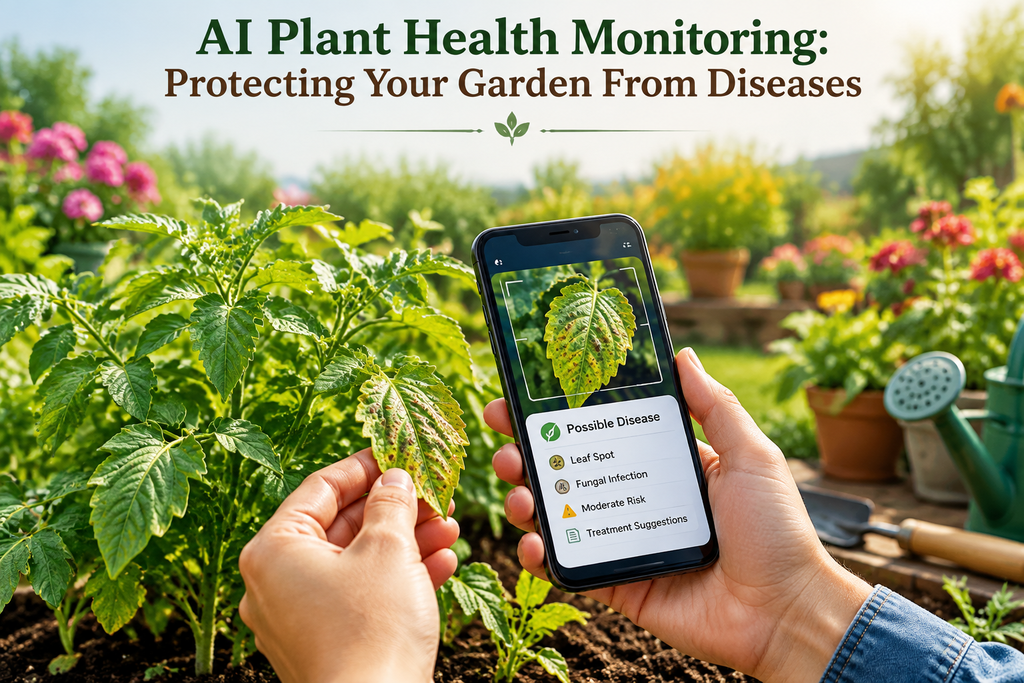
For example, if a tomato plant develops dark spots on its leaves, an AI gardening application can analyze the image and identify whether the issue may be related to fungal infection, nutrient deficiency, or environmental stress.
How AI Detects Plant Diseases
Traditional gardening methods depend mainly on experience and observation. Experienced gardeners can often recognize diseases, but beginners may struggle to understand the difference between normal changes and serious problems.
AI plant disease detection uses advanced image recognition technology. A gardener simply takes a picture of the affected plant using a smartphone. The AI system examines the image and searches for patterns related to known plant diseases.
The process usually involves three steps.
First, the AI collects the plant image. The quality of the image helps the system understand the condition of the leaves, stems, or flowers.
Second, the AI compares the image with a large database containing information about different diseases, pests, and plant conditions.
Third, the system provides an analysis and suggests possible treatments or preventive actions.
This technology allows gardeners to identify problems faster and reduce the risk of losing valuable plants.
Benefits of AI Plant Health Monitoring for Home Gardens
Early Disease Detection
One of the biggest advantages of AI plant monitoring is early detection. Many plant diseases become difficult to control after they spread throughout the garden.
AI can recognize small changes that humans may ignore. A slight change in leaf color or a small unusual spot may indicate the beginning of a disease. Detecting these signs early allows gardeners to take action before the problem becomes severe.
Early detection saves time, reduces costs, and protects plants from serious damage.
Better Plant Care Decisions
Every plant has different needs. Some plants require more sunlight, while others prefer shade. Some need frequent watering, while others grow better in dry soil.
AI gardening systems analyze plant conditions and provide personalized recommendations. They can help gardeners understand:
When to water plants
How much sunlight plants need
Which nutrients may be missing
When fertilizer should be applied
How to improve plant growth
This information helps create a healthier environment for plants.
Reducing Chemical Use
Many gardeners use pesticides whenever they notice problems, but unnecessary chemical use can harm soil quality and beneficial insects.
AI plant health monitoring helps identify the actual cause of plant problems. If a plant is suffering because of poor watering or nutrient imbalance, gardeners can solve the problem without using chemicals.
This supports eco friendly gardening practices and creates a safer environment for families, pets, and wildlife.
Saving Time and Effort
Garden maintenance requires regular observation. Checking every plant manually can be difficult, especially in large gardens.
AI tools reduce this workload by providing quick analysis. Gardeners can monitor multiple plants and receive alerts when something requires attention.
For busy people, AI makes gardening more convenient and manageable.
AI Sensors and Smart Garden Technology
Modern AI plant monitoring systems often work with smart sensors. These small devices collect information from the garden environment and send data to AI platforms.
Common smart garden sensors measure:
Soil moisture
Temperature
Humidity
Light intensity
Soil nutrients
For example, a soil moisture sensor can detect when the soil becomes too dry. The AI system can then notify the gardener that watering is required.
Similarly, if humidity levels become too high, AI can warn about possible fungal disease risks because many fungi grow in warm and humid conditions.
The combination of sensors and AI creates a smart garden that can respond to plant needs more accurately.
AI Plant Monitoring Apps for Beginners
Many beginners feel gardening is complicated because they do not know how to identify plant problems. AI based gardening apps make the process easier.
These applications allow users to upload plant pictures and receive information about possible diseases, pests, and care methods.
Some apps also provide:
Plant identification
Growth tracking
Watering reminders
Fertilizer recommendations
Gardening guides
These features help beginners learn plant care while improving their gardening skills.
Role of AI in Preventing Garden Diseases
Prevention is always better than treatment. AI does not only identify existing diseases but can also help prevent future problems.
By analyzing environmental conditions, AI can predict situations where diseases are more likely to appear.
For example, if a garden has high humidity for several days, AI may suggest improving air circulation around plants. If soil moisture remains too high, it may recommend reducing watering frequency.
These preventive recommendations help gardeners maintain healthier plants throughout the year.
AI Monitoring for Different Types of Plants
AI plant health technology can support many types of gardens, including:
Vegetable gardens
Flower gardens
Indoor plants
Fruit trees
Herbal gardens
Each plant has unique health requirements. AI systems can recognize different plant species and provide specific care suggestions.
For example, roses may require different disease management compared to tomato plants. Indoor plants may need different light conditions compared to outdoor plants.
AI helps gardeners provide customized care instead of using the same method for every plant.
Challenges of AI Plant Health Monitoring
Although AI gardening technology offers many benefits, it also has some limitations.
The accuracy of AI depends on the quality of data and images. A blurry picture or poor lighting can affect results.
AI recommendations should also be considered as guidance rather than a complete replacement for gardening knowledge. Experienced gardeners and professional advice may still be necessary for serious plant problems.
Another challenge is that some advanced AI gardening systems require sensors and smart devices, which may increase the initial cost.
However, as technology continues to improve, AI gardening tools are becoming more affordable and easier to use.
The Future of AI in Gardening
The future of gardening will become increasingly connected with artificial intelligence. Smart gardens may soon use advanced AI systems that automatically adjust watering, monitor plant health, and provide real time recommendations.
Future AI gardening systems may include:
Automatic disease treatment suggestions
Robotic garden assistants
Advanced plant growth prediction
Climate based gardening advice
Complete smart garden management
These developments will help people grow healthier plants while using fewer resources.
How Beginners Can Start Using AI for Plant Care
Beginners do not need expensive equipment to start using AI in gardening. A simple smartphone and an AI plant monitoring application can provide valuable assistance.
A good starting approach is:
Take regular pictures of plants
Observe changes in growth
Use AI tools for identification
Follow recommended care practices
Maintain proper watering and sunlight conditions
Over time, gardeners can combine AI knowledge with personal experience to become better plant caretakers.
Conclusion
AI plant health monitoring is transforming modern gardening by making plant care smarter, easier, and more effective. Instead of waiting for diseases to become serious, gardeners can now identify problems early and take preventive action.
Through image recognition, smart sensors, and data analysis, artificial intelligence helps protect plants from diseases while reducing unnecessary chemical use. Whether someone has a small balcony garden or a large outdoor space, AI technology can provide valuable support.
The future of gardening is not only about growing more plants but also about understanding them better. With the help of AI plant health monitoring, anyone can create a healthier, greener, and more beautiful garden.