Related Articles


Introduction
Gardening has always been a relaxing and rewarding activity. A beautiful garden can make a home feel fresh, peaceful, and connected with nature. However, for beginners, creating and maintaining a garden can sometimes feel confusing. Many people want to grow plants but do not know which plants are suitable, how much water they need, what type of soil is best, or how to protect them from diseases.
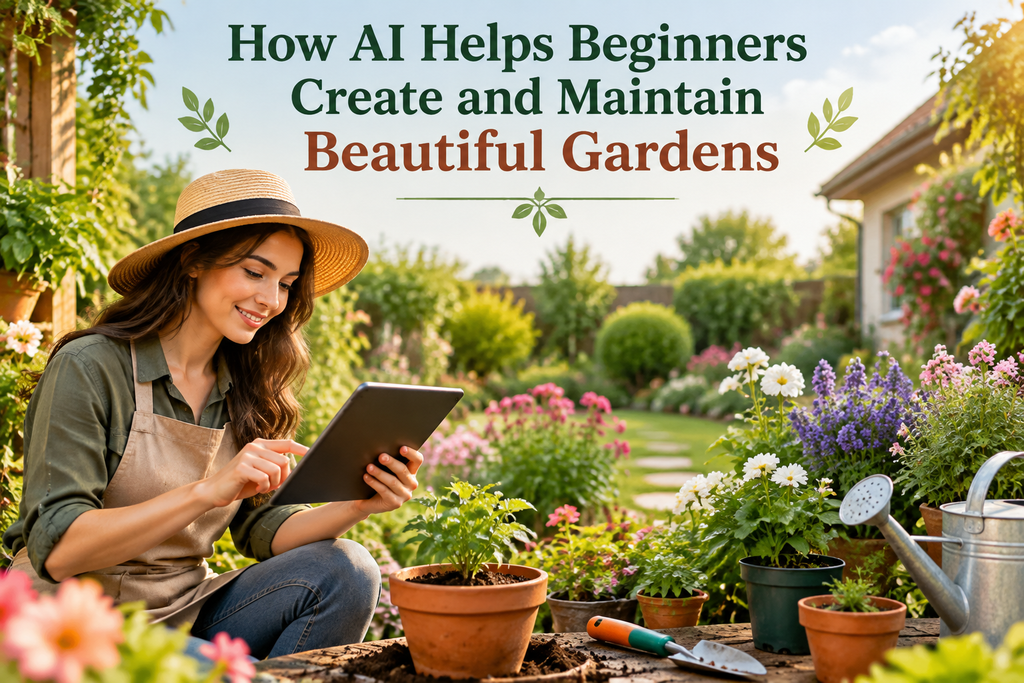
This is where artificial intelligence, commonly known as AI, is changing the way people approach gardening. AI technology is helping beginners design beautiful gardens, choose the right plants, understand plant needs, and maintain healthy green spaces with less effort.
In the past, gardening knowledge mainly came from books, experts, or years of personal experience. Today, AI gardening tools provide quick guidance and personalized suggestions. Whether someone has a large backyard or a small balcony garden, AI can help create a beautiful and healthy environment.
AI Makes Garden Planning Easier for Beginners
One of the biggest challenges for new gardeners is planning the garden layout. Beginners often struggle with deciding where to place plants, how much space each plant requires, and which areas receive enough sunlight.
AI powered garden design tools can analyze important factors such as available space, sunlight conditions, climate, and personal preferences. Based on this information, AI can suggest suitable garden layouts.
For example, if someone has a small urban balcony, AI can recommend vertical gardening ideas, compact plants, and space saving solutions. For a large backyard, AI can suggest flower arrangements, vegetable sections, walking paths, and relaxing areas.
This makes garden planning easier because beginners do not need advanced gardening knowledge. They can use AI recommendations to create a practical and attractive garden design.
AI Helps Beginners Choose the Right Plants
Choosing the right plants is one of the most important steps in successful gardening. Many beginners buy plants because they look beautiful but later discover that those plants cannot survive in their local environment.
AI helps solve this problem by analyzing information about climate, soil type, sunlight availability, and maintenance requirements. It can recommend plants that are more likely to grow successfully in a specific location.
For example, AI can suggest drought resistant plants for areas with limited water availability. It can recommend shade loving plants for areas where sunlight is low. It can also suggest seasonal flowers and vegetables according to weather conditions.
This personalized plant selection process saves time, reduces plant loss, and increases confidence among beginners.
AI Provides Smart Plant Care Guidance
Every plant has different needs. Some plants require frequent watering, while others prefer dry soil. Some need direct sunlight, while others grow better in shade. Understanding these differences can be difficult for beginners.
AI gardening assistants provide simple instructions about plant care. They can tell users when to water plants, when to add fertilizer, and how to manage common problems.
Some AI tools work with smart sensors placed in the soil. These sensors collect information about moisture levels, temperature, and soil conditions. AI then analyzes this data and provides recommendations.
For example, instead of following a fixed watering schedule, AI can inform gardeners that a plant needs water because the soil moisture level has become low. This prevents both overwatering and underwatering.
AI Helps Identify Plant Diseases
Plant diseases are a common problem for gardeners. Beginners often find it difficult to recognize symptoms such as yellow leaves, spots, slow growth, or damaged stems.
AI image recognition technology can help identify plant problems. A gardener can take a picture of an unhealthy plant and upload it to an AI based application. The system analyzes the image and provides possible causes and solutions.
For example, AI may identify signs of fungal infection, nutrient deficiency, or pest damage. It can then suggest steps such as adjusting watering habits, improving soil quality, or applying suitable treatments.
Early detection helps save plants and prevents diseases from spreading throughout the garden.
AI Supports Efficient Water Management
Water management is one of the most important parts of gardening. Many beginners either water plants too much or forget to water them regularly. Both situations can damage plant health.
AI helps create smarter watering systems. Smart irrigation systems use AI technology to understand weather conditions, soil moisture, and plant requirements.
If rainfall is expected, AI can reduce unnecessary watering. During hot weather, it can increase watering frequency based on plant needs.
This not only helps plants grow better but also saves water. Sustainable gardening practices supported by AI can reduce environmental impact and make gardens more efficient.
AI Helps Create Beautiful Garden Designs
A beautiful garden is not only about healthy plants. The arrangement, colors, and overall appearance also matter. Many beginners have creative ideas but struggle to visualize the final result.
AI garden design applications can create virtual garden models. Users can see how different plants, flowers, furniture, lighting, and decorations may look together before making changes.
This allows beginners to experiment with different styles. They can try modern gardens, traditional gardens, minimalist designs, or natural landscapes.
AI makes garden creativity accessible to everyone, even people who have no professional design experience.
AI Makes Gardening Education Simple
Learning gardening skills takes time, but AI makes the learning process faster and easier. Beginners can ask AI gardening assistants questions and receive clear explanations.
Instead of searching through many websites or reading complicated gardening books, users can get simple guidance according to their specific situation.
AI can explain topics such as composting, soil improvement, pruning techniques, plant nutrition, and seasonal gardening activities.
This personalized learning experience helps beginners develop gardening skills step by step.
AI Helps Maintain Gardens Through Automation
Maintaining a garden requires regular attention. Tasks such as watering, monitoring plant health, controlling pests, and checking soil conditions can become difficult for busy people.
AI automation reduces this workload. Smart gardening systems can automatically control irrigation, monitor environmental conditions, and provide reminders for important tasks.
For example, AI can remind gardeners when it is time to fertilize plants or trim overgrown branches. These small reminders help maintain a garden throughout the year.
Automation allows people to enjoy gardening without feeling overwhelmed by daily responsibilities.
AI Encourages Sustainable Gardening
Modern gardening is becoming more focused on sustainability. People want gardens that support nature, save resources, and reduce waste.
AI helps beginners practice environmentally friendly gardening. It can recommend native plants that require less water and maintenance. It can suggest composting methods and natural pest control techniques.
AI can also help gardeners understand how their choices affect the environment. By making smarter decisions, beginners can create gardens that are beautiful and sustainable.
AI and Indoor Gardening
Indoor gardening has become popular among people living in apartments and urban areas. However, growing plants indoors requires understanding light, humidity, temperature, and plant selection.
AI helps indoor gardeners create suitable environments for plants. It can recommend artificial lighting, suitable plant varieties, and proper care routines.
Smart indoor gardening systems can monitor plant conditions and automatically adjust settings when needed.
This makes indoor gardening easier for beginners who want to bring nature into their homes.
The Future of AI in Gardening
The future of gardening will become even more connected with artificial intelligence. As technology improves, AI systems will provide more accurate recommendations and better automation.
Future AI gardening tools may analyze plant growth patterns, predict diseases before symptoms appear, and create completely personalized garden management plans.
Robotic gardening assistants may also become more common. These robots could perform tasks such as planting seeds, removing weeds, and maintaining gardens automatically.
AI will not replace human creativity and connection with nature. Instead, it will become a helpful partner that makes gardening easier and more enjoyable.
Benefits of Using AI for Beginner Gardeners
AI provides many advantages for people who are new to gardening. Some important benefits include:
Better plant selection according to location and climate
Reduced chances of plant damage
Easy understanding of gardening techniques
Efficient use of water and fertilizers
Personalized garden design ideas
Early detection of plant diseases
Less time required for garden maintenance
Higher confidence among beginners
These benefits make AI a valuable tool for anyone who wants to create a beautiful garden.
Conclusion
Artificial intelligence is transforming the gardening experience for beginners. Creating and maintaining a beautiful garden no longer requires years of experience or expert knowledge. With AI powered tools, beginners can plan garden layouts, choose suitable plants, understand plant care, detect problems, and maintain healthy green spaces.
AI makes gardening more accessible, efficient, and enjoyable. It combines modern technology with the natural beauty of plants, helping people create gardens that improve their homes and lifestyles.
For beginners, AI is not just a technology tool. It is a gardening companion that provides guidance, inspiration, and confidence. As AI continues to develop, more people will be able to enjoy the benefits of beautiful and sustainable gardens with greater ease.